
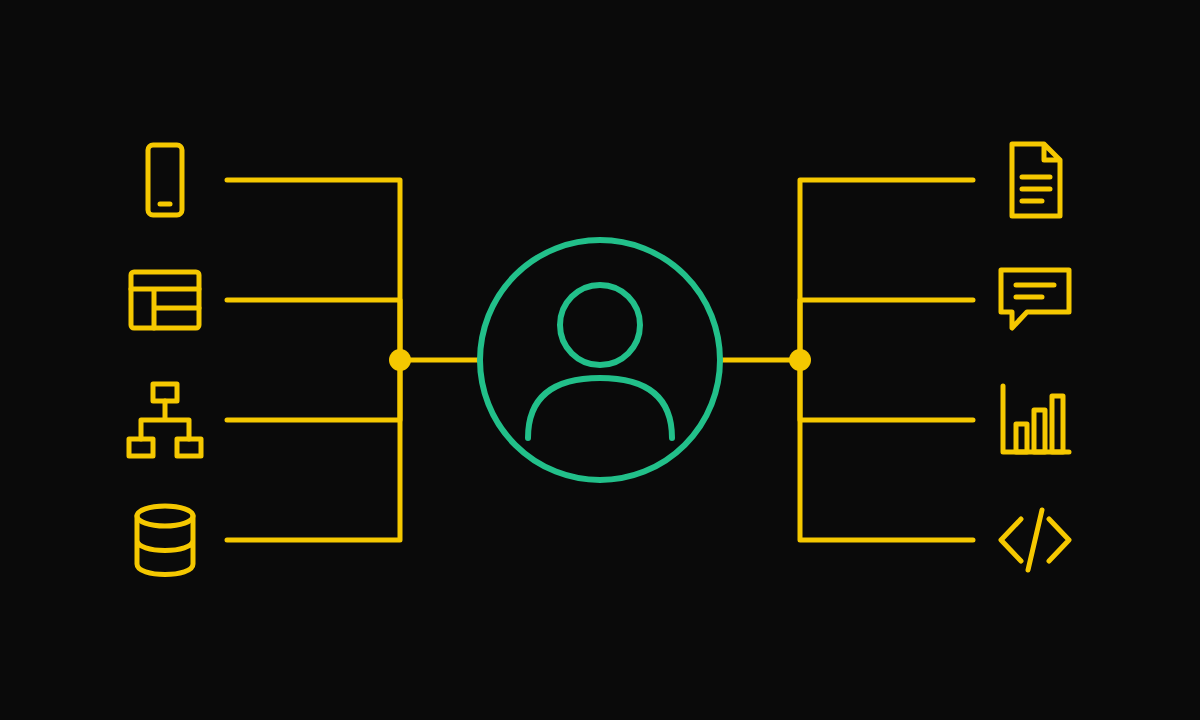
The advert asks for Canvas apps, model-driven apps, Power Automate, Dataverse, SharePoint, Teams, Power BI, APIs and JavaScript. It would like PL-200 and PL-400 as well. One person, starting as soon as possible.
Specs like this are rarely a recruitment problem. They're a sign that nobody owns the platform's direction, and the organisation is hoping a new hire will sort that out along with everything else.
You can hire someone to build. It's much harder to hire someone to decide, on their own, with nobody checking.
The first clue
Two of those exam codes are already out of date.
Microsoft retired the PL-200 exam on 31 August 2026 and the PL-400 exam on 30 October 2026. PL-200 has been replaced by the Intelligent Applications Builder Associate certification (AB-410), and the Power Platform Developer Associate certification now has a new exam, AB-400.
Anyone who passed those exams still knows what they knew, and asking for a certification isn't wrong. The codes are a small detail, but they raise a better question: has anyone checked the rest of the spec against what your platform needs, or did it start from an older advert?
Read it again
Behind every line is a decision nobody has made.
| The spec says | The decision behind it |
|---|---|
| Canvas and model-driven apps | Which processes deserve an app, and which kind? |
| Dataverse and SharePoint | Where should each kind of data live? |
| Power Automate and APIs | What can run in a flow, and what needs proper code and error handling? |
| Power BI | Which numbers have to be right, and who owns the definitions? |
| Able to work independently | Who reviews this person's work? |
Those are architecture decisions. A new hire under pressure to deliver will still make them, quickly, one app at a time, because the work can't wait. None of that is their fault. But each decision becomes harder to change as more gets built on top of it, as we've written about in the Dataverse schema decisions you can't undo.
There's a second problem. The spec needs someone senior enough to make all of these calls, then puts them in a role with nobody above them who understands the platform. They can't get a second opinion, and you can't tell a good decision from a bad one until something breaks. A good candidate will ask who they'd go to on technical decisions. If the honest answer is nobody, you've found the gap.
Before you advertise
Four things to put in place first.
Environments
Microsoft's guidance is separate development, test and production environments. Without them, every change is an experiment on live data.
Data policies
Often still called DLP policies, these control how connectors can share your data. Microsoft recommends protecting every environment with one. Set them before people start building, because tightening them afterwards can break what's already there.
A security model
Decide who can see and change what, using roles and teams that match how you work. It's far easier to do this before the apps multiply than to explain it to an auditor afterwards.
Application lifecycle management
Solutions, source control and a pipeline, so changes reach production the same way every time. Microsoft's ALM guidance for Copilot Studio puts one rule first: don't customise outside a development environment.
None of this needs a big programme. It needs someone senior to make the calls and write them down, so whoever builds next has something to work to.
The real choice
Hire, a monthly contract, or both?
Hire when you have steady build work for years ahead, the direction is already set, and someone can review what gets built. A good developer in that position will do well. If what's missing is direction and there's enough work to fill the role, hire a senior lead rather than a developer.
Use a monthly contract when the work comes in bursts, you need judgement more than hours, or nobody in-house could tell you whether a design is sound. It also helps if you aren't yet sure what you'd be hiring for.
Do both when you want the skills in-house eventually. Set the direction first, then hire. Your new starter arrives to a clear architecture, working guardrails and someone to review their work, and your job spec gets a lot shorter.
What would this person have to decide on their own, and who would check those decisions?
If you can't answer that, a developer isn't the first thing you need.
How our Power Platform lead service works